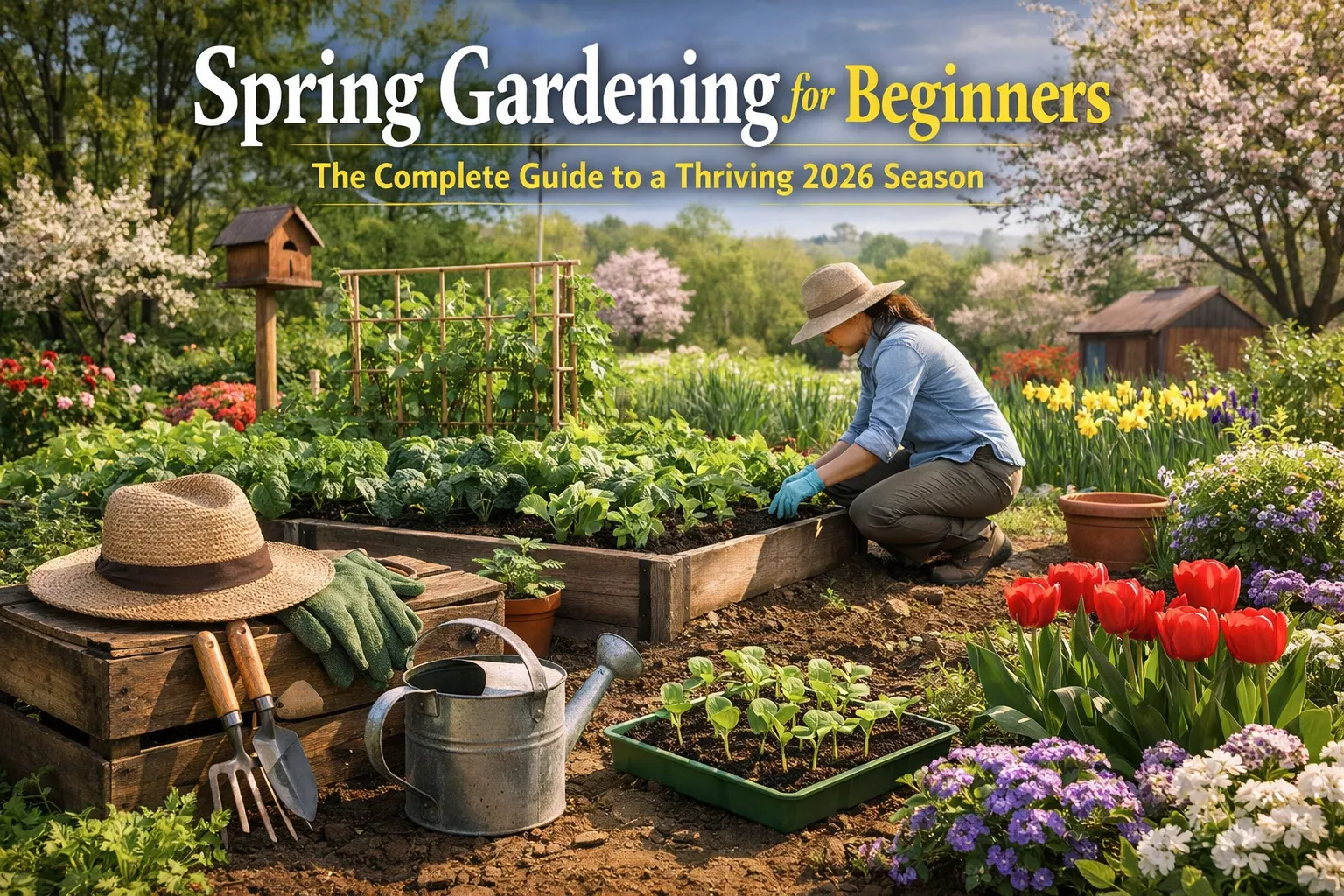
Imagine going out to your backyard this spring and harvesting crisp, sun-warmed lettuce or vibrant snap-fresh peas that you grew yourself.
For most novices, the “when, where and how” of spring gardening can feel daunting — afraid that one frost or soil mixed improperly will spoil everything.
This guide removes the guesswork. We’ve extracted some of the latest in 2026 climate-smart trends into a simple and actionable roadmap. Doesn’t matter if you live in a huge back yard in Canada or the tiniest of balconies in London, you will learn how to grow a big yield resilient garden from scratch.
In this complete guide, you’ll discover:
- The top 5 climate-smart vegetables for 2026.
- Step-by-step soil preparation for a chemical-free harvest.
- Modern tech-integrated watering tips to save time and money.
- How to protect your sprouts from unpredictable spring frost.
- Top 10 Easy Spring Gardening Hacks
Understanding Your 2026 Garden Climate
The 2026 season is defined by “Climate-Smart Growing.” With unpredictable spring thaws in Canada and the UK, and heatwaves hitting the US earlier, choosing resilient varieties is no longer optional.
The Top 5 Beginner Vegetables for Spring 2026
| Vegetable | Best Planting Time | 2026 Trend Variety |
| Tomatoes | After last frost | Heatmaster Hybrid |
| Spinach | Early Spring | America (Heat-tolerant) |
| Peppers | Late Spring | California Wonder |
| Potatoes | Mid Spring | Early Rose (Heirloom) |
| Cabbage | Early Spring | Summer Cross |
Modern Tools: Gardening Smarter, Not Harder
2026 sees a massive rise in AI-driven gardening.
- Soil Sensors: Simple Bluetooth sensors that tell your phone when to water.
- Vigoroot Planters: Air-pruning pots that prevent plants from becoming root-bound.
Top 10 Easy Spring Gardening Hacks for Newbies in 2026
Spring 2026 is when the future of our backyards gets reimagined. We’re saying goodbye to the “perfect lawn” and leaning into biodiversity, resilience and functional beauty. Be it a rainy UK suburb, a sunny US valley or the temperate Canadian plains, these hacks suit the modern-day newcomer.
1. The “Cardboard & Compost” No-Dig Method
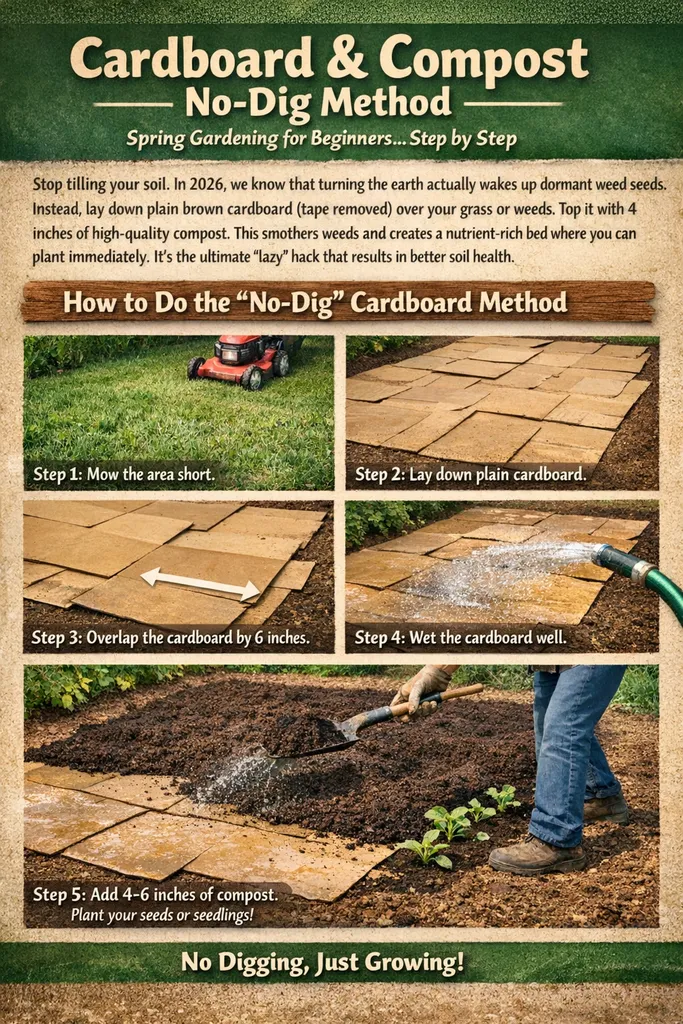
Stop tilling your soil. By 2026, we know that tilling the earth does awaken dormant weed seeds. Instead, put down plain brown cardboard (without tape) on top of your grass or weeds. Cover that with 4 inches of good compost. This chokes out weeds and provides a nutrient-rich bed where you can immediately plant. It’s the ultimate “lazy” hack that improves soil health.
How to Do the “No-Dig” Cardboard Method
- Step 1: Mow the grass or weeds in your chosen area as short as possible.
- Step 2: Flatten plain brown cardboard boxes (remove all plastic tape and staples).
- Step 3: Overlap the cardboard edges by 6 inches so weeds can’t sneak through the gaps.
- Step 4: Wet the cardboard thoroughly with a hose.
- Step 5: Spread 4–6 inches of high-quality compost or garden soil directly on top. You can plant your seeds or starts into the compost immediately!
2. Upcycled Milk Jug “Cloches”
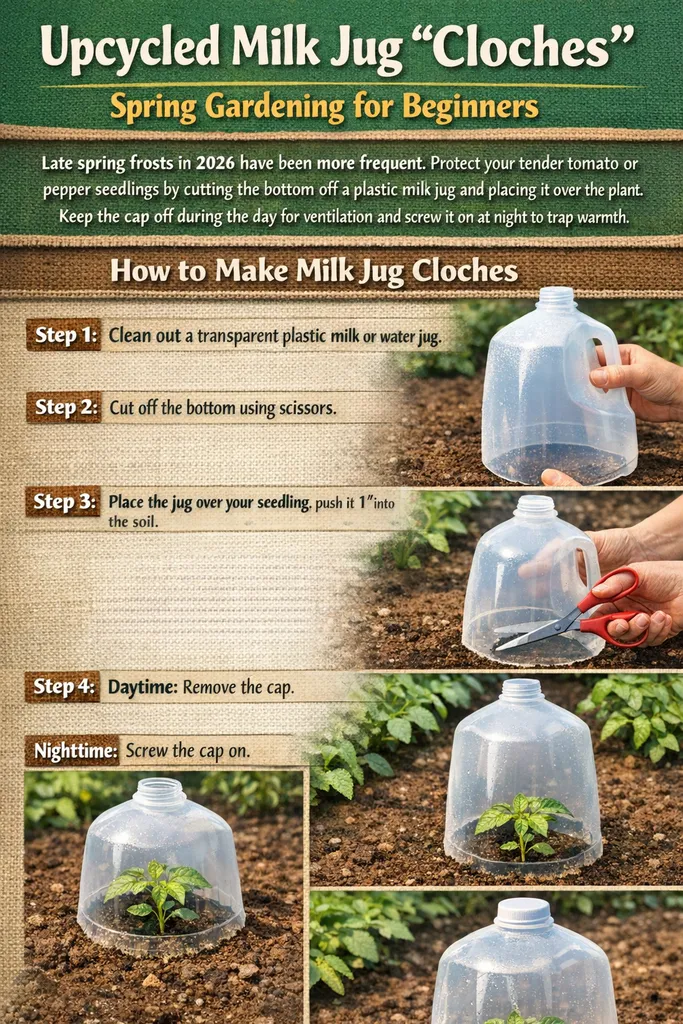
More frequent in 2026 have been late spring frosts. To protect your delicate tomato or pepper seedlings, simply cut the bottom off a plastic milk jug and place it over the plant. Leave the cap off during the day for ventilation and put it on at night to keep warmth in. It’s a no-cost, do-it-yourself greenhouse that will protect your plants from a sudden chill.
How to Make Milk Jug Cloches
- Step 1: Clean out a transparent plastic milk or water jug.
- Step 2: Use scissors to cut off the entire bottom of the jug.
- Step 3: Place the jug over your young seedling, pushing it 1 inch into the soil so it doesn’t blow away.
- Step 4: Daytime: Remove the cap so the plant doesn’t overheat. Nighttime: Screw the cap back on to trap the earth’s warmth.
3. Smart “Hydro-Zoning”
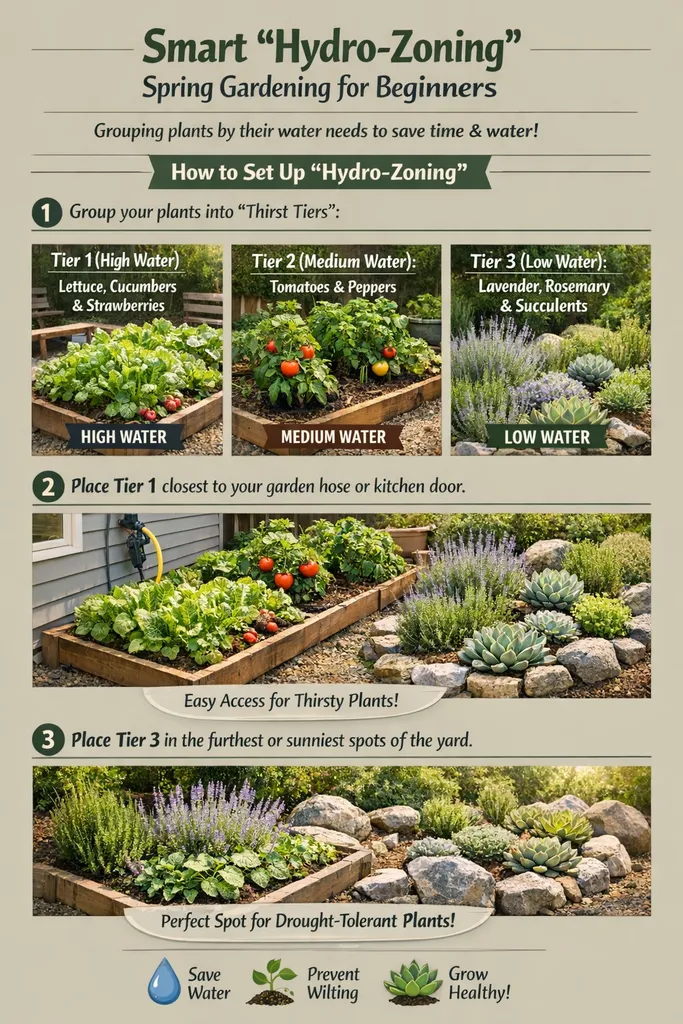
Grouping plants with similar water needs — known as hydro-zoning — is now a basic principle of landscape design for 2026. Place your thirsty greens (lettuce, spinach) close to your source of water or use self-watering containers. Position your drought-tolerant “superstars” — like lavender, rosemary and native grasses — farther apart. This avoids the newbie mistake of overwatering your succulents while your kale droops.
How to Set Up “Hydro-Zoning”
- Step 1: Group your plants into “Thirst Tiers.”
- Tier 1 (High Water): Lettuce, cucumbers, and strawberries.
- Tier 2 (Medium Water): Tomatoes and peppers.
- Tier 3 (Low Water): Rosemary, Lavender, and Succulents.
- Step 2: Place Tier 1 closest to your garden hose or kitchen door.
- Step 3: Place Tier 3 in the furthest or sunniest spots of the yard.
4. The Cinnamon Seedling Shield
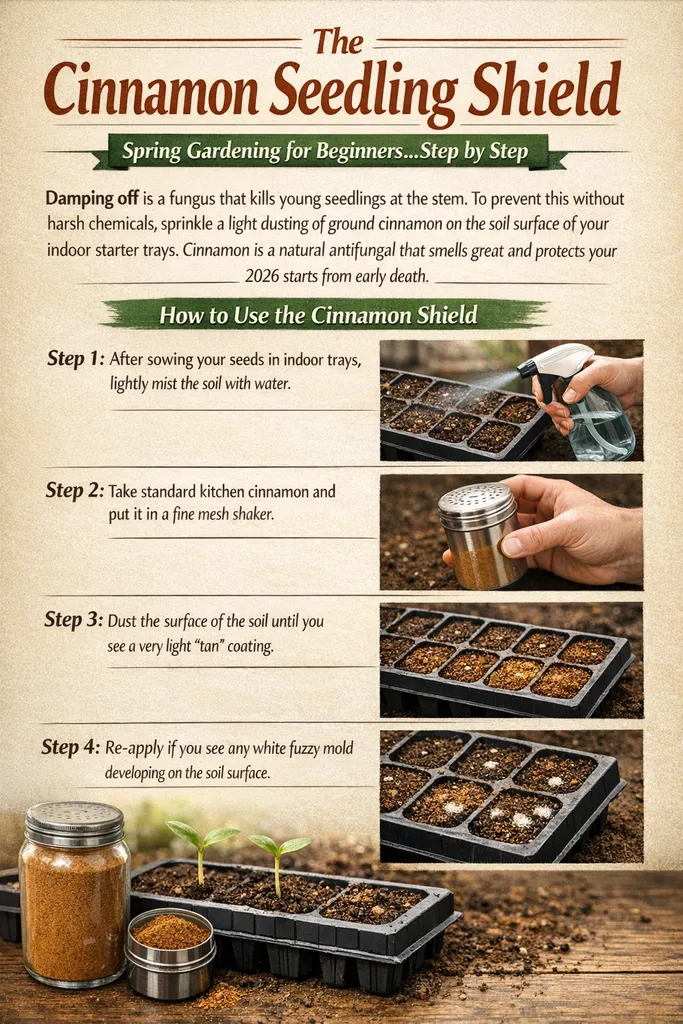
“Damping off” is a fungus that creates girdles at the stem of young seedlings, killing them. To avoid this without resorting to harsh chemicals, sprinkle a light coating of ground cinnamon across the soil surface of your indoor starter trays. Cinnamon is a natural antifungal that makes your 2026 starts smell really good and protect from early death.
How to Use the Cinnamon Shield
- Step 1: After sowing your seeds in indoor trays, lightly mist the soil with water.
- Step 2: Take standard kitchen cinnamon and put it in a fine mesh shaker.
- Step 3: Dust the surface of the soil until you see a very light “tan” coating.
- Step 4: Re-apply if you see any white fuzzy mold developing on the soil surface.
5. Utilize “Climate-Smart” Varieties
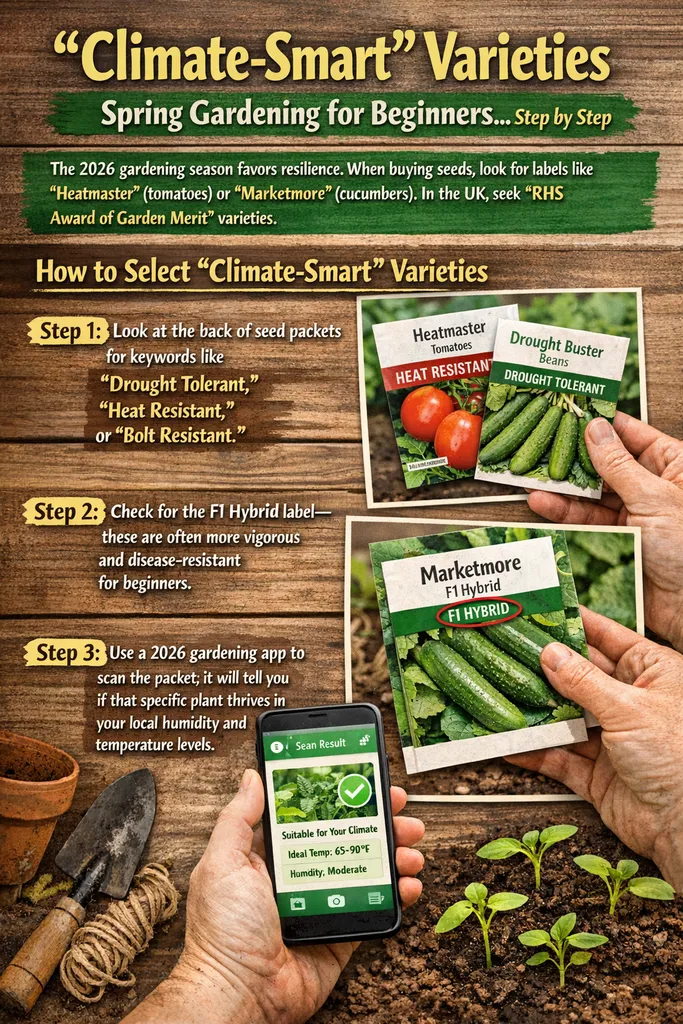
The gardening season of 2026 will favor resilience. When purchasing seeds, search for labels such as “Heatmaster” (tomatoes) or “Marketmore” (cucumbers). These varieties were specially bred to tolerate the temperature swings we’ve experienced lately. In the UK, choose “RHS Award of Garden Merit” (AGM) varieties for guaranteed success.
How to Select “Climate-Smart” Varieties
- Step 1: Look at the back of seed packets for keywords like “Drought Tolerant,” “Heat Resistant,” or “Bolt Resistant.”
- Step 2: Check for the F1 Hybrid label—these are often more vigorous and disease-resistant for beginners.
- Step 3: Use a 2026 gardening app to scan the packet; it will tell you if that specific plant thrives in your local humidity and temperature levels.
6. Coffee Filter Pot Liners
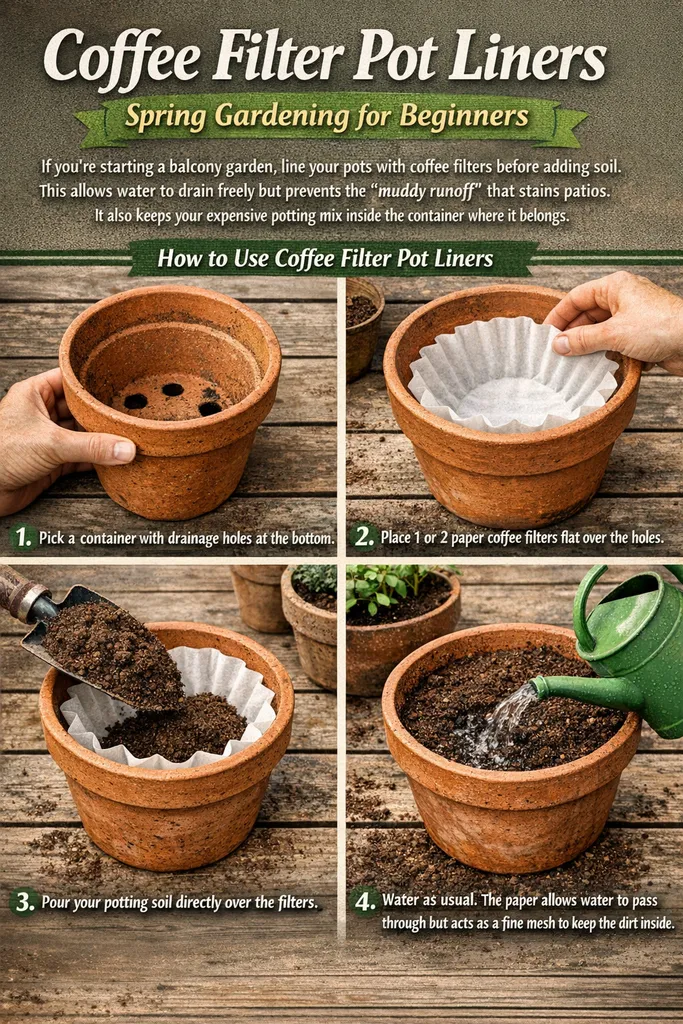
If you’re launching a balcony garden, the next time you fill those pots with soil, line them with coffee filters first. This enables water drainage but prevents gravel’s “muddy runoff” that tarnishes patios. It also helps keep your expensive potting mix inside the container where it belongs.
How to Use Coffee Filter Pot Liners
- Step 1: Pick a container with drainage holes at the bottom.
- Step 2: Place 1 or 2 paper coffee filters flat over the holes.
- Step 3: Pour your potting soil directly over the filters.
- Step 4: Water as usual. The paper allows water to pass through but acts as a fine mesh to keep the dirt inside.
7. The “Finger Test” vs. AI Moisture Meters
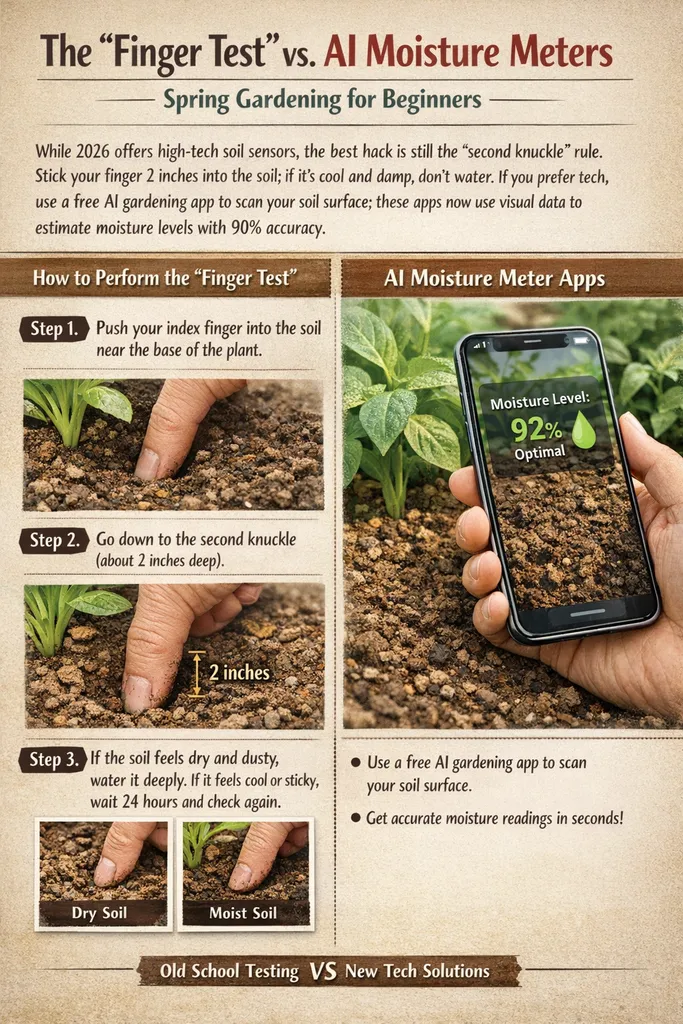
Even in 2026, with high-tech soil sensors available, the best hack is still the “second knuckle” rule. (Push your finger 2 inches into the soil; if it’s cool and damp, don’t water.) But in less earthy surroundings, whip out a free AI gardening app and scan your soil surface; those apps now analyze visual data to estimate moisture levels with 90 percent accuracy.
How to Perform the “Finger Test”
- Step 1: Push your index finger into the soil near the base of the plant.
- Step 2: Go down to the second knuckle (about 2 inches deep).
- Step 3: If the soil feels dry and dusty at your fingertip, water it deeply. If it feels cool or sticky, wait 24 hours and check again.
8. Vertical “Foodscaping” with Cattle Panels
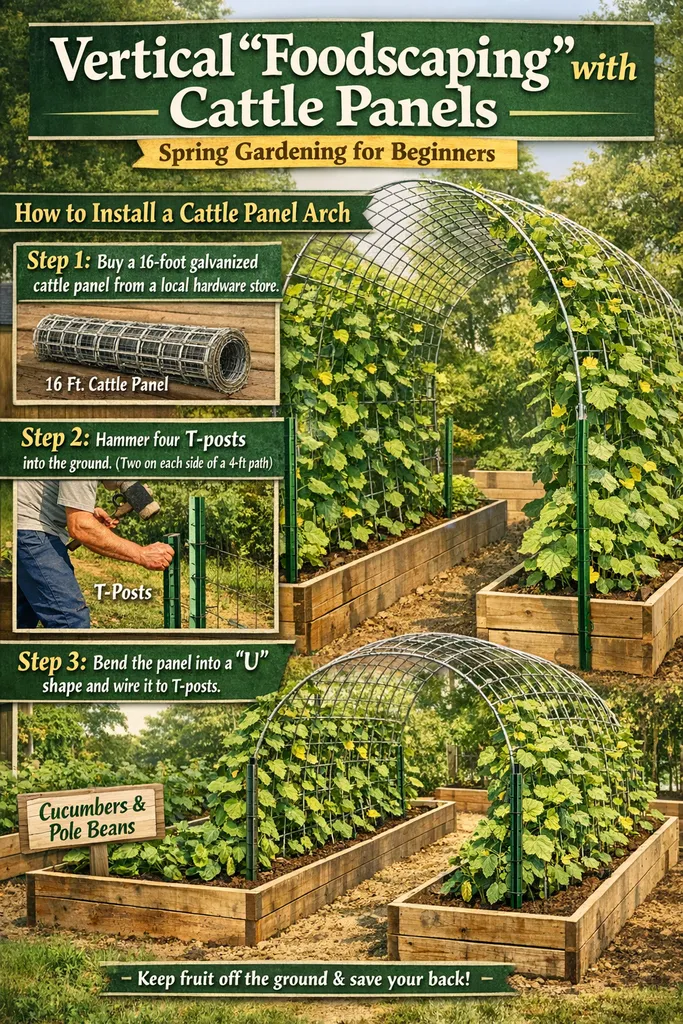
Space has become a luxury in 2026. Instead of allowing cucumbers and squash to sprawl on the ground (where they are consumed by pests), use a “Cattle Panel” hooped between two raised beds. Your plants will grow toward heaven, forming a stunning “edible tunnel” that makes harvesting easier and gives your back a break.
How to Install a Cattle Panel Arch
- Step 1: Buy a 16-foot galvanized cattle panel from a local hardware store.
- Step 2: Hammer four “T-posts” into the ground (two on each side of a 4-foot path).
- Step 3: Bend the panel into a “U” shape and wire it to the T-posts.
- Step 4: Plant climbing veggies like cucumbers or pole beans at the base. They will naturally climb the wire, keeping the fruit off the ground.
9. Epsom Salt Tomato Boost
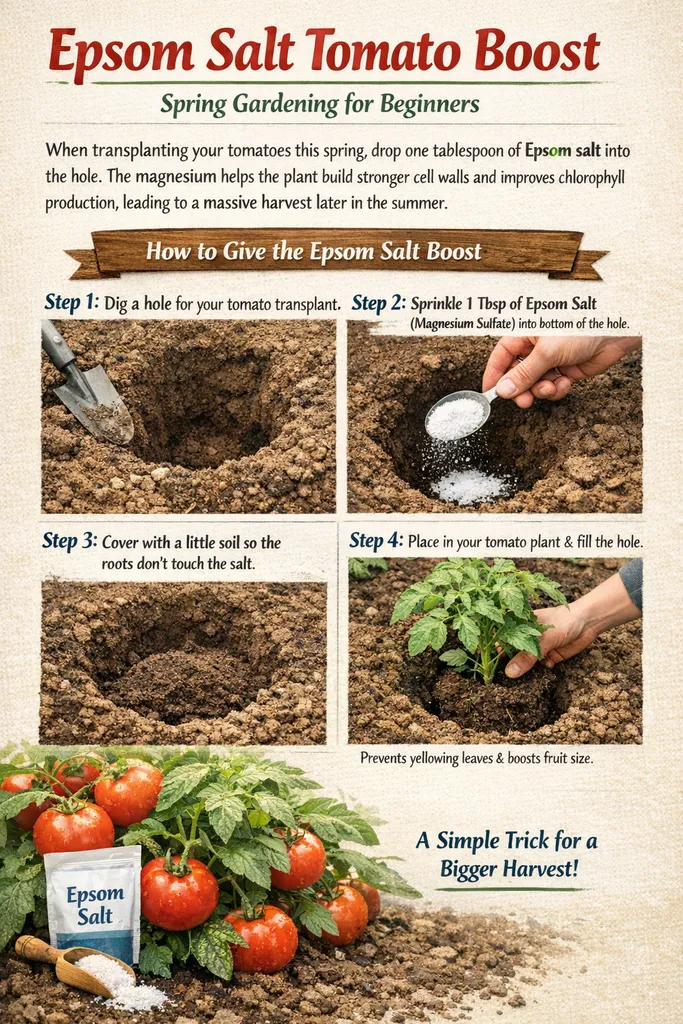
When transplanting your tomatoes this spring, add one tablespoon of Epsom salt into the hole. It helps the plant build sturdier cell walls and improves chlorophyll production, meaning a monster harvest later in the summer.
How to Give the Epsom Salt Boost
- Step 1: Dig a hole for your tomato transplant.
- Step 2: Sprinkle 1 tablespoon of Epsom salt (Magnesium Sulfate) into the bottom of the hole.
- Step 3: Cover the salt with a thin layer of dirt so the roots don’t touch it directly at first.
- Step 4: Place your tomato plant in and fill the hole. This prevents yellowing leaves and boosts fruit size.
10. The “Wild Edged” Lawn
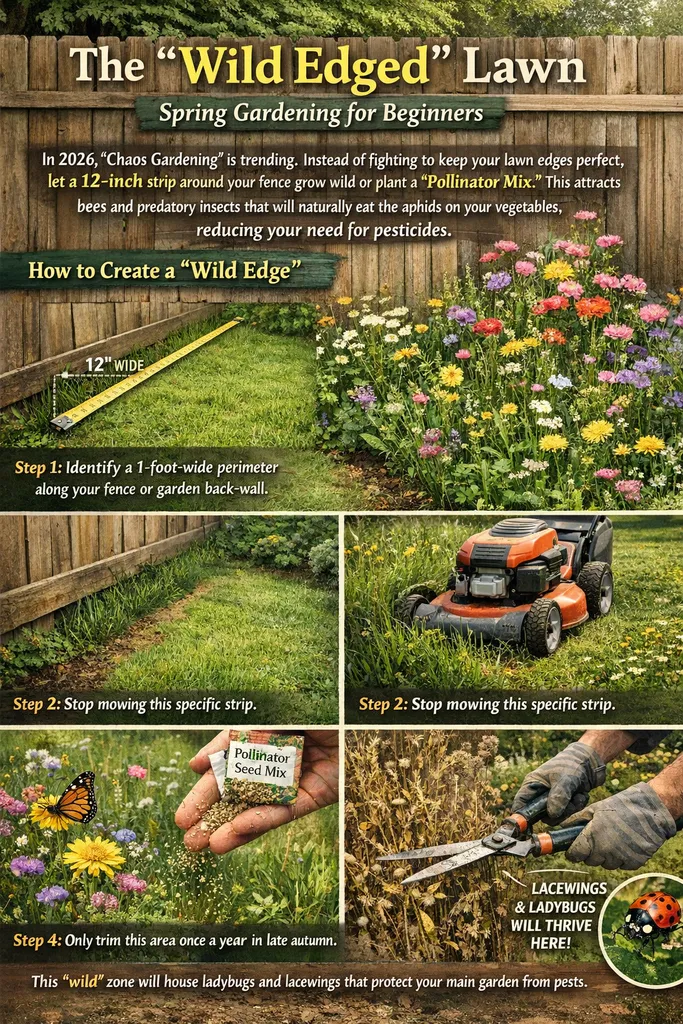
“Chaos Gardening” is in vogue in 2026. No need to battle keeping your lawn’s edges pristine; allow a 12-inch strip around your fence to grow wild or sow a “Pollinator Mix” in that area. This attracts bees and predatory insects, which will eat the aphids you find on your vegetables naturally, cutting down your need for pesticides.
How to Create a “Wild Edge”
- Step 1: Identify a 1-foot-wide perimeter along your fence or garden back-wall.
- Step 2: Stop mowing this specific strip.
- Step 3: Toss a “Native Pollinator Seed Mix” into the grass in early spring.
- Step 4: Only trim this area once a year in late autumn. This “wild” zone will house ladybugs and lacewings that protect your main garden from pests.
Step-by-step soil preparation for a chemical-free harvest.
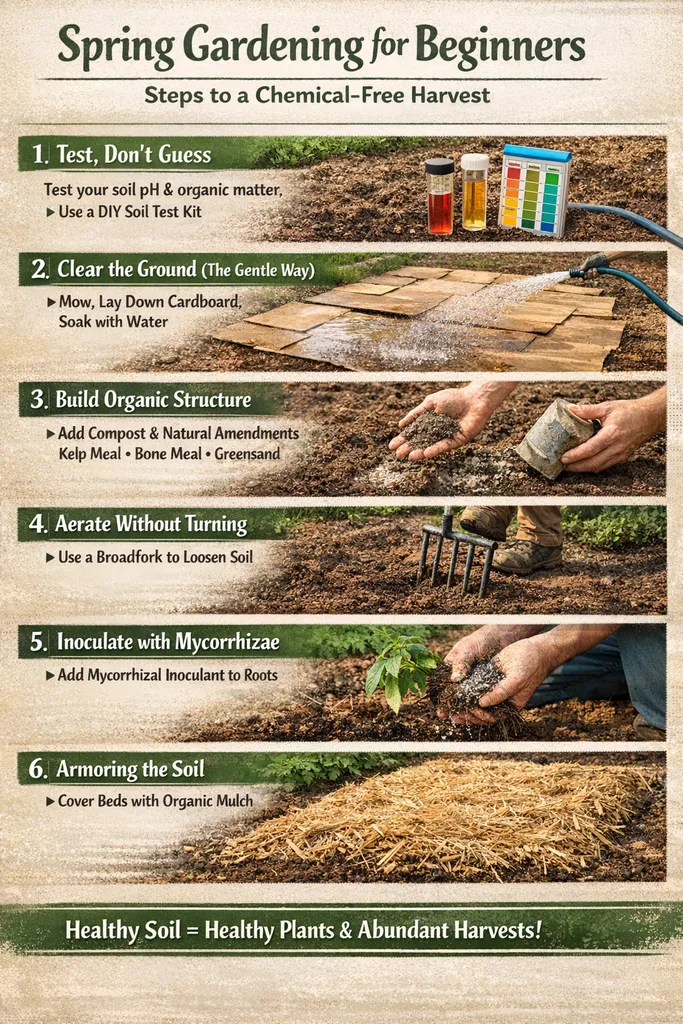
Becoming a chemical-free grower comes down to changing your mindset — if you want a compost-free harvest, then forget feeding the plant and start feeding the soil. A thriving soil biology would empower your plants to develop a natural immunity against pests and diseases thus removing the necessity of synthetic interventions.
Here is your step-by-step guide to building a “living” soil foundation.
1. Test, Don’t Guess
Before adding anything, you need to know what you’re working with.
- Action: Buy a DIY soil test kit or send a sample to a local university extension.
- What to look for: Focus on pH levels (most veggies love 6.0 to 7.0) and organic matter percentage.
- The Goal: You want to identify deficiencies so you can fix them with natural minerals rather than “balanced” synthetic N-P-K fertilizers.
2. Clear the Ground (The Gentle Way)
Avoid heavy tilling, which destroys the delicate fungal networks (mycelium) and flips weed seeds to the surface.
- The Method: Use Sheet Mulching (Lasagna Gardening).
- Step: Mow weeds as low as possible, cover the area with plain brown cardboard (remove tape!), and soak it with water. This smothers weeds and invites earthworms to do the “tilling” for you.
3. Build Organic Structure
Now, layer your “browns” and “greens” on top of that cardboard to create nutrient-dense humus.
- The “Gold” Layer: Add 3–4 inches of high-quality, OMRI-listed compost or well-aged herbivore manure (cow, horse, or chicken).
- The Mineral Boost: If your test showed deficiencies, sprinkle in natural amendments like:
- Kelp Meal: For trace minerals.
- Bone Meal: For phosphorus.
- Greensand: For potassium.
4. Aerate Without Turning
Instead of a rototiller, use a broadfork or a pitchfork.
- Action: Push the tool into the ground and pull back slightly to crack the soil surface.
- Why: This allows oxygen and water to reach the roots without disrupting the microbial colonies that keep your plants healthy.
5. Inoculate with Mycorrhizae
Chemical-free gardening relies on a symbiotic relationship between roots and fungi.
- Action: When planting, sprinkle a mycorrhizal inoculant powder directly onto the root ball or into the planting hole.
- Benefit: These fungi act as an extended root system, helping the plant “reach” further for water and nutrients that would otherwise be inaccessible.
6. Armoring the Soil
Bare soil is stressed soil. It dries out, gets hot, and loses nutrients to erosion.
- Action: Cover your beds with 2 inches of organic mulch (straw, shredded leaves, or wood chips).
- The Payoff: This suppresses weeds, retains moisture, and eventually breaks down into more food for your soil.



Quick Comparison: Chemical vs. Biological
| Feature | Chemical Approach | Chemical-Free (Biological) |
| Nutrient Source | Synthetic Salts | Compost & Organic Matter |
| Soil Structure | Degrades over time | Improves over time |
| Pest Control | Pesticides | High plant brix (natural sugar) |
| Water Needs | High (fast evaporation) | Low (mulch retains moisture) |
Pro Tip: Start a “Compost Tea” regimen. Steeping high-quality compost in aerated water creates a liquid microbial booster you can pour directly on the soil to supercharge the ecosystem.
How to protect your sprouts from unpredictable spring frost.
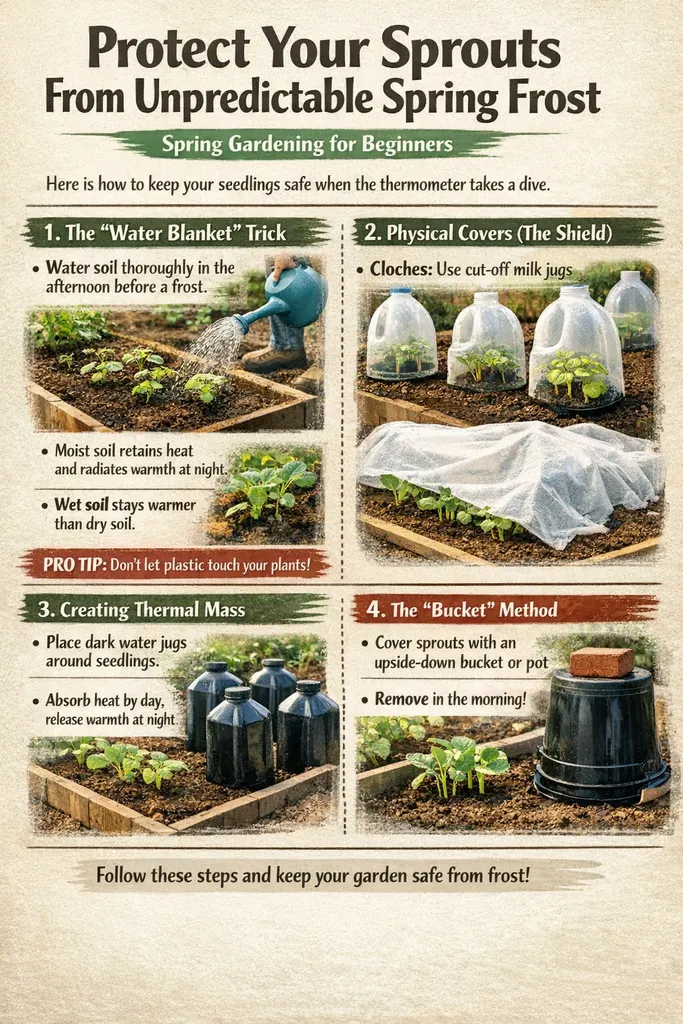
Here is how to keep your seedlings safe when the thermometer takes a dive.
1. The “Water Blanket” Trick
This sounds counterintuitive, but water your soil thoroughly in the afternoon before a frost is predicted.
- The Science: Moist soil absorbs more solar radiation during the day and radiates heat upward during the night.
- The Bonus: Wet soil stays warmer than dry, cracked soil, which can actually allow cold air to penetrate down to the root zone.
2. Physical Covers (The Shield)
You want to create a microclimate that traps the heat rising from the earth.
- Cloches: For individual plants, use a “cloche.” You can make these by cutting the bottoms off clear milk jugs or 2-liter soda bottles. Leave the cap off during the day for ventilation!
- Frost Blankets: Use dedicated “garden fabric” or old bedsheets.
- Pro Tip: Use stakes to keep the fabric from actually touching the leaves. If the fabric gets wet and freezes to the foliage, it can cause more damage than the air itself.
- Avoid Plastic: Don’t let plastic sheeting touch your plants. It transfers cold directly to the tissue and can “cook” the sprouts if you don’t remove it the second the sun comes out.
3. Creating Thermal Mass
If you have a particularly sensitive bed, you need a “battery” to store heat.
- Action: Place dark-colored jugs filled with water around your seedlings.
- How it works: The water heats up during the day and slowly releases that energy as the air temperature drops at night, keeping the immediate vicinity a few degrees warmer.
4. The “Bucket” Method
For small sprouts, a simple five-gallon bucket or a large nursery pot flipped upside down works wonders.
- Action: Place the bucket over the plant in the evening and weigh it down with a brick.
- Crucial Step: You must remove these in the morning. Even on a cool day, the greenhouse effect can overheat a sprout in a small container within an hour of direct sunlight.
Frost Tolerance Quick Guide
Know who needs the most help:
| The “Wimps” (Must Cover) | The “Tough Guys” (Can Handle Light Frost) |
| Tomatoes & Peppers | Kale & Collards |
| Squash & Cucumbers | Spinach |
| Basil | Peas |
| Beans | Radishes |
When to Unveil
One of the biggest mistakes is not taking off covers in a timely manner. Remove the covers as soon as the sun is up and above freezing (usually 9:00 AM). It helps to prevent the formation of moisture, which can contribute to fungal diseases such as “damping off.”
FAQ
- When should I start my spring garden in 2026?
- Usually 2-4 weeks after the last frost date in your specific zone.
- What are the easiest vegetables for beginners?
- Lettuce, radishes, and bush beans are virtually foolproof.
- How do I protect my garden from late spring frost?
- Use “cloches” or frost blankets (tunnels) to trap ground heat.
- Is organic gardening more expensive?
- Initially, yes, but it saves money on pesticides and fertilizers over time.
- What is “Lemonading” in gardening?
- A 2026 trend of turning garden “failures” (like poor soil) into features (like a succulent rock garden).
- Do I need a big yard to grow food?
- No, vertical planters and “Botanical Bentos” allow for high yields on balconies.
- What is the best mulch for 2026?
- Living mulches (groundcovers) or high-quality organic compost.
- How often should I water my new sprouts?
- Keep the top inch of soil moist, but never soggy.
- What are “Keystone Plants”?
- Native plants that support 90% of local wildlife (essential for 2026 biodiversity).
- Can I use AI to help my garden?
- Yes, apps now identify pests and suggest watering schedules based on local weather data.
- How do I stop pests without chemicals?
- Attract beneficial insects like ladybugs and use neem oil as a last resort.
- What is “Jewel-Toned” gardening?
- A 2026 color trend focusing on deep purples, rubies, and emeralds in both flowers and vegetables.
Final Verdict
Preparing for Spring 2026 is not only about planting seeds in the ground, it’s caring for a sustainable ecosystem. By emphasizing soil health, choosing climate-smart varieties and embracing the “maximalist” beauty of wedging edibles into ornamentals, you’re not a beginner at all — you are a land steward. The move toward sustainable, tech-assisted and joyful gardening makes this the right year to begin. Do not be scared of mistakes, we “lemonade” them into growth in 2026. Happy planting!

Leave a Reply