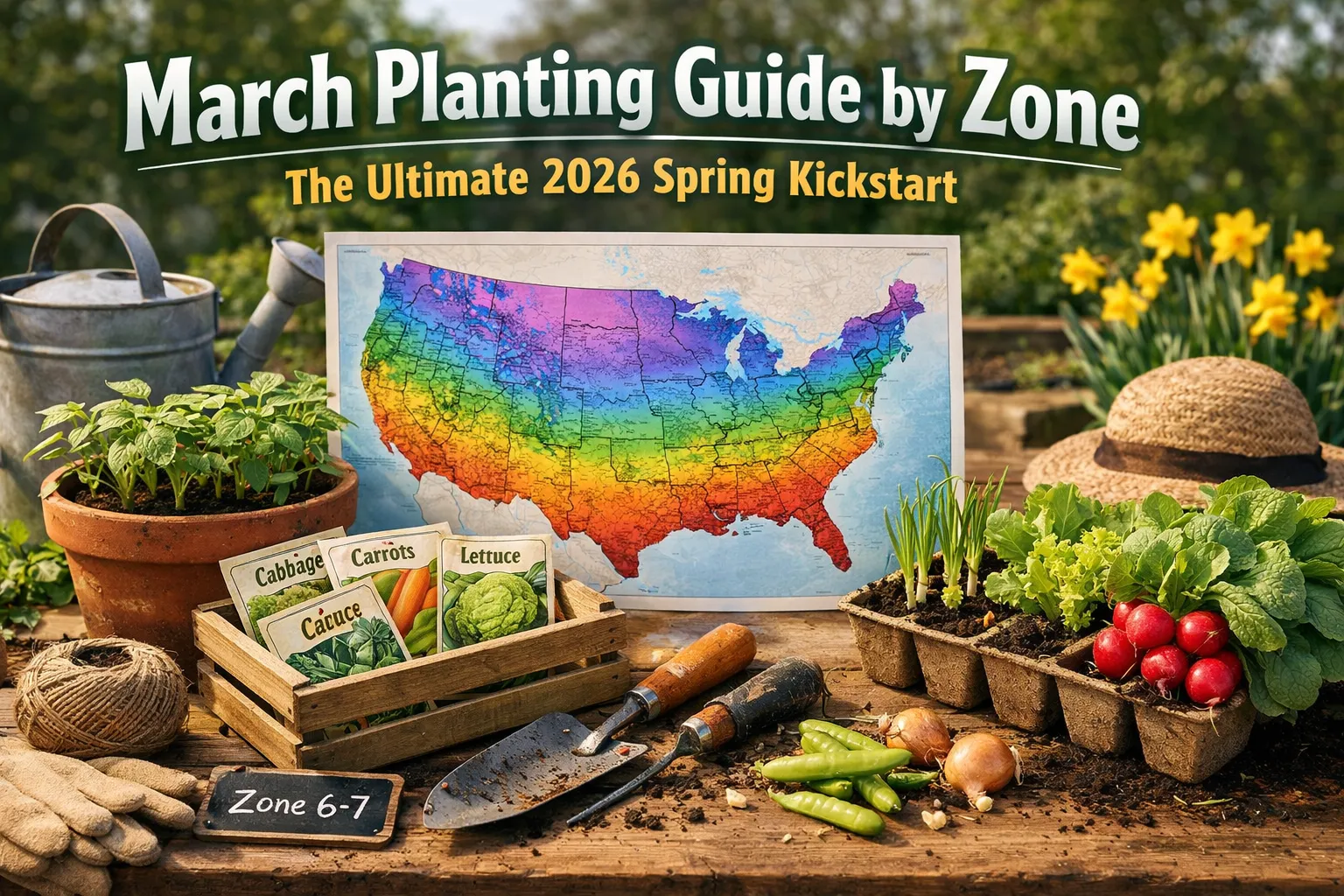
The March Planting Guide by Zone When the frost starts to thaw, every gardener aches to plunge a trowel into the ground. But the most significant challenge that many confront is timing. Plant too early in Zone 5, and a late freeze will kill your tender seedlings; plant too late in Zone 9, and the summer heat bolts your lettuce before you can make the first harvest. This disconnect results in wasted money, dead plants and a season of frustration.
In this complete guide,
you’ll learn the precise science behind March planting based on your specific hardiness zone in the US, UK and Canada. We have solved the “these so-called plants” mystery by breaking tasks down into USDA and regional zones. You will figure out what seeds to start indoors, which ones need to be sown directly into the warming earth and how to prep your soil for a record-breaking harvest. Anyway, whether you’re a back-garden novice or one step below global green-thumb status, this ultra-detailed road map will make sure that your 2026 garden flourishes from its first sprout.
Why March is the “Golden Window”
By 2026, we are getting less predictable “shoulder seasons.” March is no longer merely about waiting for the thaw; it’s a matter of soil preparation and biological rhythm. Starting now helps produce the stronger, deeper root systems needed to survive predicted intensifying summer heatwaves later this year.
How to Plant by Zone (The Simple Way)
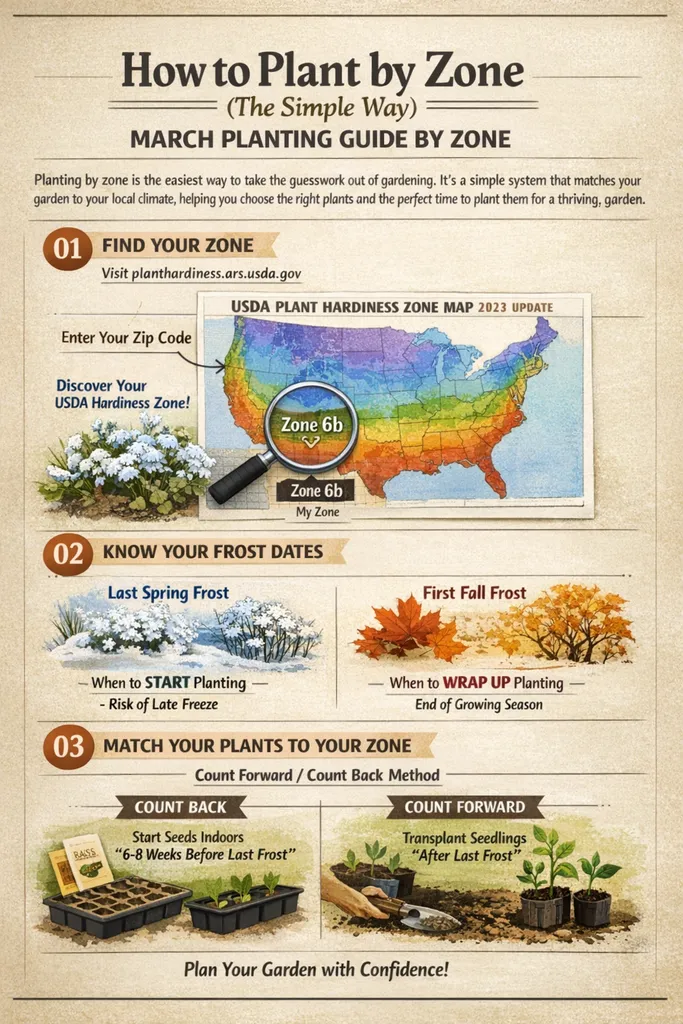
The simplest way to eliminate guess work in gardening is to plant by zone. It’s an easy-to-use system that aligns your garden with conditions in your area, guiding you toward selecting the ideal plants and planting them at the right time for a thriving, low-pressure plot.
This guide will walk you through the simple, three-step process to become a zone-savvy gardener.
Step 1: Find Your Zone
At the core of planting by zone is knowing your USDA Plant Hardiness Zone. The map above divides North America into zones according to the average annual extreme minimum winter temperature. So in layman’s terms, it gives you the low-down on how cold it usually gets in your region during winter — that’s what helps you understand which perennial plants will make a go of it there year after year.
Finding your zone is incredibly easy:
- Go to the official source: Visit the USDA Plant Hardiness Zone Map website at https://2bitzone.net/ .
- Enter your zip code: Type your zip code into the search bar on the map. Your specific zone, and even the more precise ‘a’ or ‘b’ half-zone, will pop up instantly .
The map is based on data up to 2023 so you’re getting the most accurate information. When you have your zone number (6b, 7a, 9b) you have the most useful piece of information you can possibly get about your garden.
Step 2: Know Your Frost Dates
Where your hardiness zone tells you what can overwinter, your frost dates tell you when to plant your garden each season. These two dates — the average last spring frost and average first fall frost — are bookends for your main growing season.
You can find your average frost dates with a quick online search for “frost dates by zip code” . Here’s why they matter:
- Last Spring Frost Date: This is your “green light” for planting warm-season crops. Planting tomatoes, peppers, and cucumbers before this date risks losing them to a late freeze .
- First Fall Frost Date: This date signals the end of the growing season. Knowing it helps you calculate if you have enough time to plant a fall crop that will mature before the cold weather arrives .
Step 3: Match Your Plants to Your Zone and Season
This is where it all comes together. With your zone and frost dates in hand, you can now confidently plan your garden. Here’s a simple way to think about it:
The “Count Forward/Count Back” Method
Use your frost dates as anchor points to figure out planting times .
- Count Back from Last Frost: Seed packets and planting guides will tell you how many weeks before the last frost to start seeds indoors. For example, you might start tomato seeds indoors “6-8 weeks before last frost” .
- Count Forward from Last Frost: After your last frost date, it’s safe to direct-sow seeds or transplant seedlings outdoors .
Seasonal Planting Guide
Different plants thrive in different parts of the growing season. Here’s a simple breakdown:
A Few Final Pro Tips
- Read the Plant Tag: When you buy a plant from a nursery, look for the zone number on its tag. If it says “Zones 5-9” and you live in zone 6, it’s a perfect match .
- Look for Your Zone: For a more detailed guide, find planting calendars or tables created specifically for your hardiness zone .
- Remember Your Microclimate: Your yard has its own small climate variations. A spot against a south-facing wall will be warmer, while a low spot in the garden might be a frost pocket . Use your zone as your guide, but also learn the unique quirks of your own garden.
Planting by zone removes the guesswork from gardening and provides a straightforward, dependable framework for success. What zone are you in? That knowledge is all you need to get started toward your best garden yet. Happy planting
Top 7 Easy Vegetables to Plant in March for a Massive Summer Harvest
March is the “starting gun” for the gardening season. Depending on your local frost dates, you can start some of these directly in the soil, while others get a head start in pots.
Here is how to plant the “Big Seven” for a high-yield summer.
1. Tomatoes (The Crown Jewel)
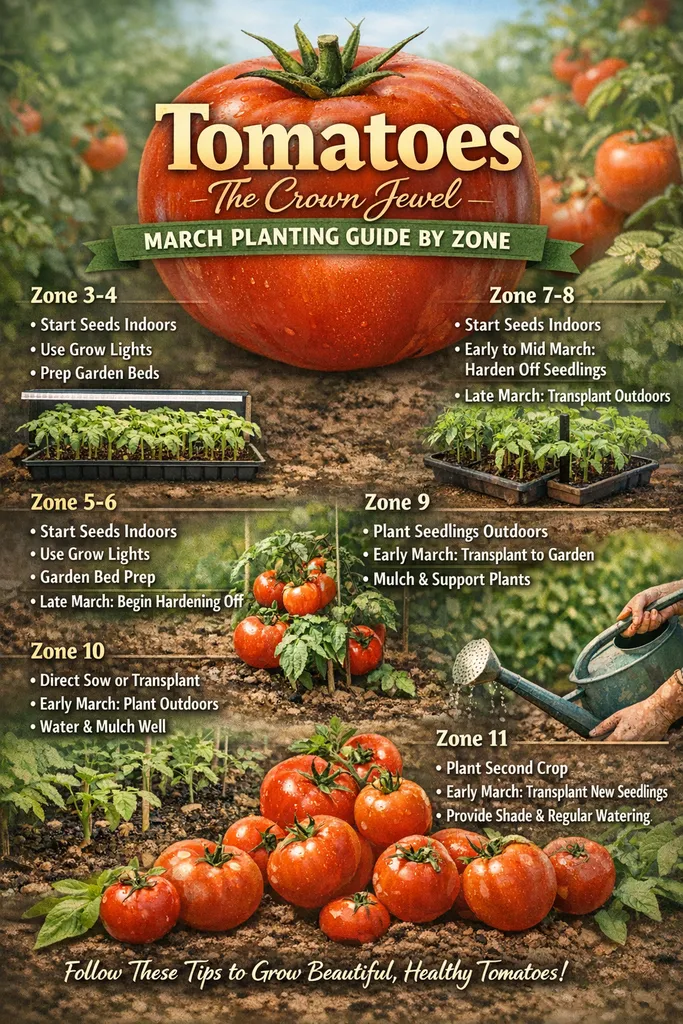
To get a massive harvest, you need to start these indoors in March so they are sturdy by May.
- How to do it: Fill small starter trays with seed-starting mix. Plant seeds 1/4 inch deep. Keep them in a warm spot (70°F–80°F) or on a heat mat.
- The Secret: Once they have two sets of leaves, transplant them into deeper pots and bury the stem up to the first set of leaves. This creates a massive root system.
- Summer Payoff: Hundreds of fruits per plant if you choose “Indeterminate” varieties.
2. Zucchini & Summer Squash
These are famous for being “too productive.” One or two plants can feed a neighborhood.
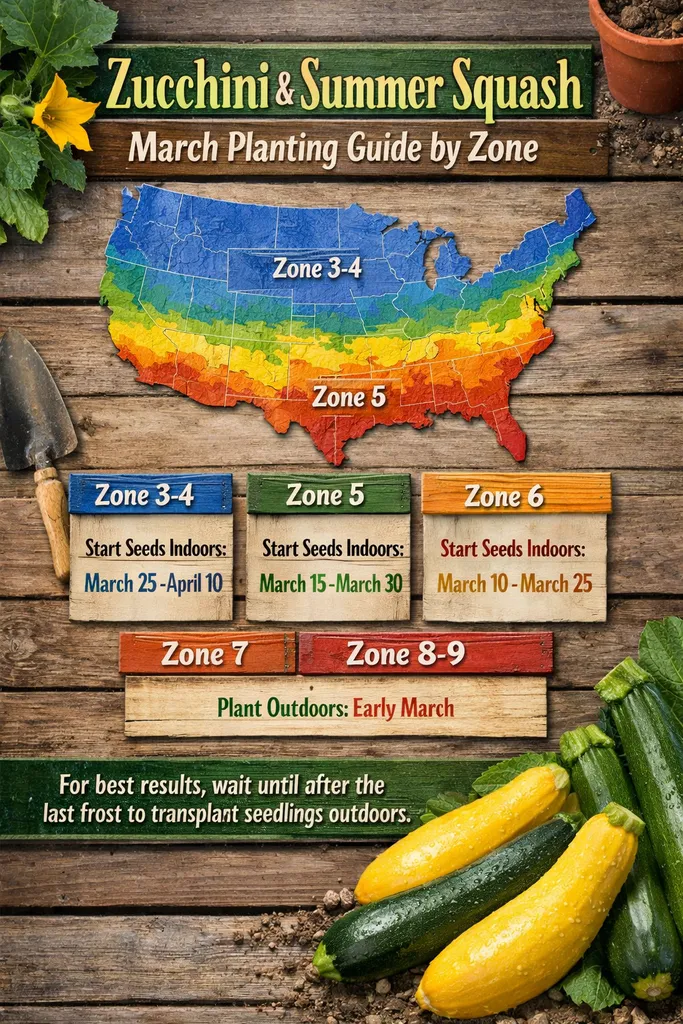
- How to do it: In late March, start these in peat pots (they hate having their roots touched). Plant seeds 1 inch deep.
- The Secret: If your soil is already warm (above 60°F), you can sow them directly in “hills”—small mounds of soil spaced 3 feet apart.
- Summer Payoff: Non-stop harvesting from July until the first frost.
3. Bell Peppers
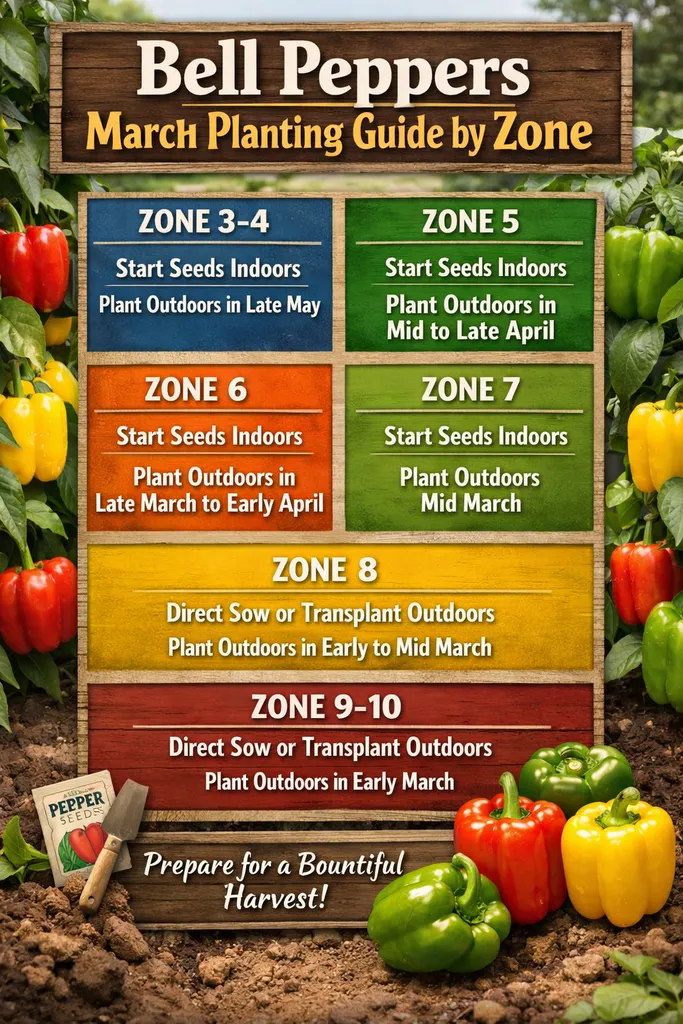
Peppers love heat, so they need a long runway. Start them now to ensure they ripen before summer ends.
- How to do it: Like tomatoes, start these indoors. They are slower to germinate, so be patient. Use a heat mat if possible.
- The Secret: Don’t overwater. Peppers like to “dry out” slightly between waterings once they are established.
- Summer Payoff: Thick-walled, crunchy peppers that taste nothing like the grocery store versions.
4. Peas (Snap or Shelling)
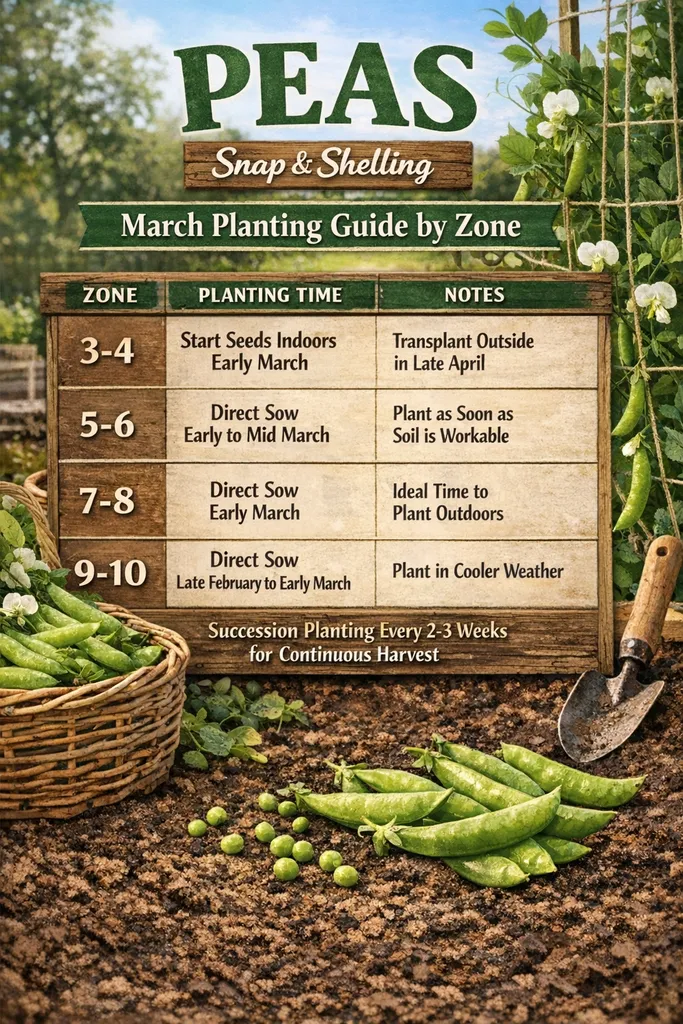
Peas thrive in the cool March air and will provide a heavy “early summer” harvest before the extreme heat hits.
- How to do it: Soak seeds in water for 12 hours before planting to speed up germination. Sow directly into the garden 1 inch deep and 2 inches apart.
- The Secret: Give them a trellis or a simple string fence immediately. They need to climb to keep the pods off the ground and prevent rot.
- Summer Payoff: A heavy yields of sweet pods in June and early July.
5. Cucumbers
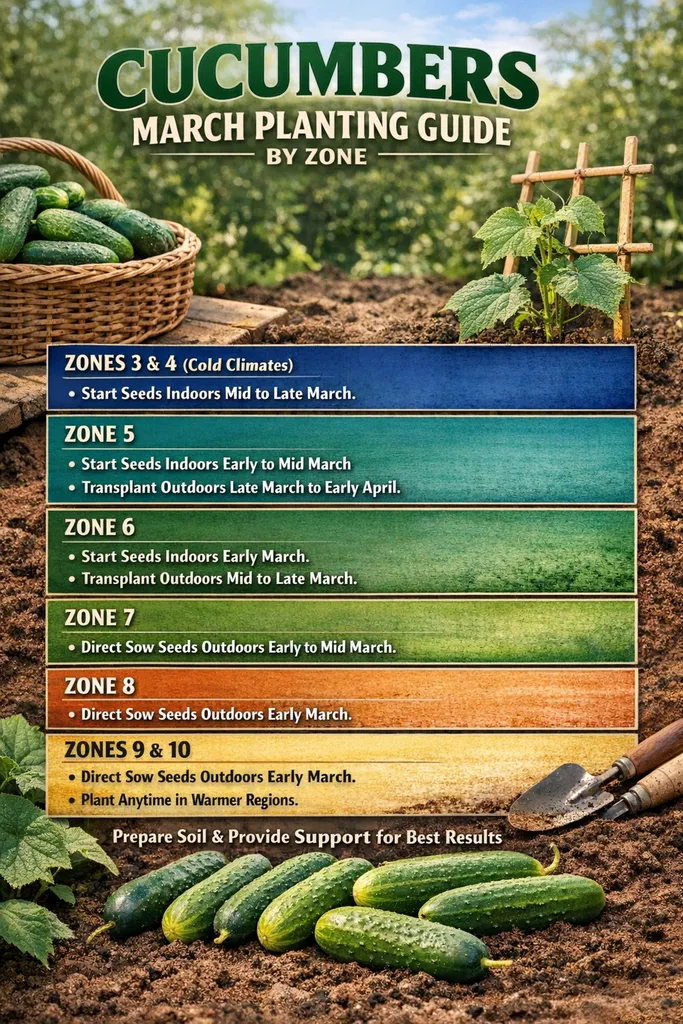
Cucumbers grow incredibly fast once the sun comes out.
- How to do it: Start indoors in late March using large 3-inch pots. They grow quickly, so don’t start them too early or they’ll get “root-bound.”
- The Secret: Plant “vining” varieties rather than “bush” varieties and grow them up a vertical cattle panel or fence. Vertical growth leads to straighter fruit and fewer pests.
- Summer Payoff: Crisp, cool snacks all summer long.
6. Potatoes
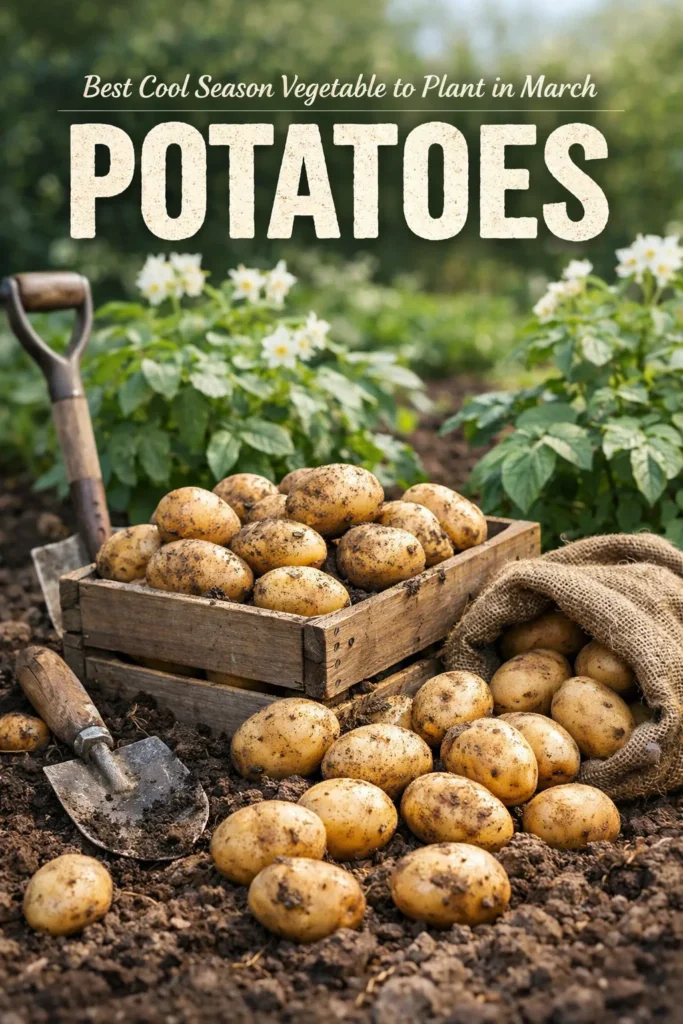
March is the traditional time to “chit” (sprout) and plant your seed potatoes.
- How to do it: Buy “seed potatoes,” cut them into chunks so each piece has at least two “eyes,” and let the cuts dry for 24 hours. Dig a trench 6 inches deep and bury them.
- The Secret: As the green leafy stems grow upward, keep covering the bottom half of the stem with more soil (this is called “hilling”). More buried stem = more potatoes.
- Summer Payoff: Huge buckets of gold or red potatoes by July/August.
7. Leafy Greens (Swiss Chard or Kale)
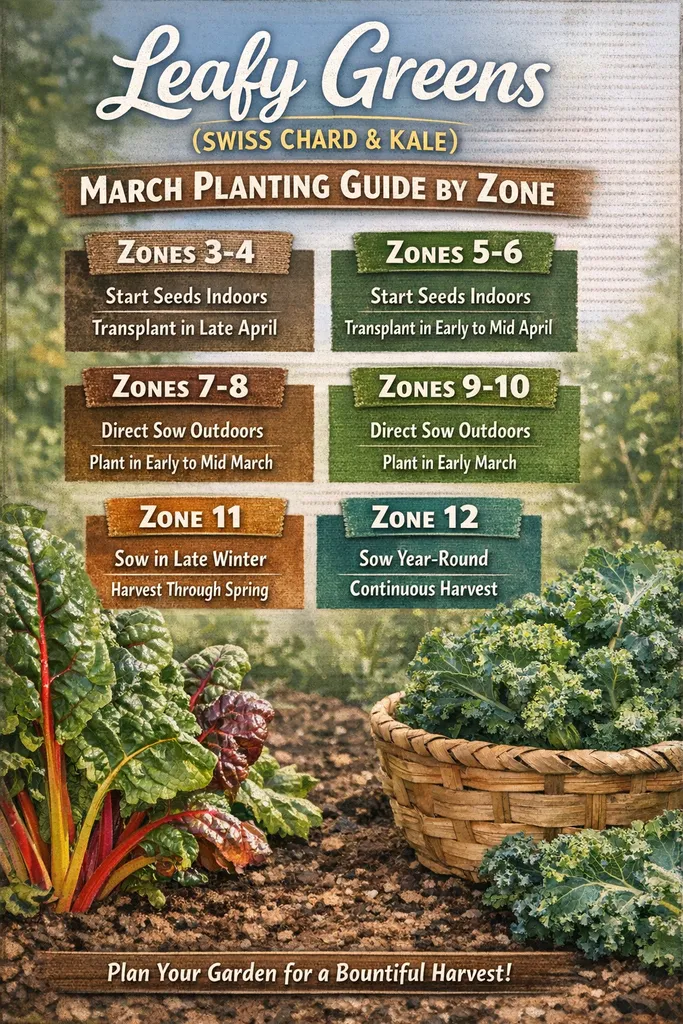
While lettuce bolts in the heat, Swiss Chard and Kale can handle the transition from spring to summer beautifully.
- How to do it: Sow seeds directly into the garden as soon as the soil can be worked. Plant 1/2 inch deep.
- The Secret: Harvest only the outer leaves. The plant will keep producing new leaves from the center all summer long.
- Summer Payoff: A “cut and come again” source of greens that lasts until winter.
Quick Prep Table
| Vegetable | Start Method | Depth | Spacing |
| Tomatoes | Indoors | 1/4″ | 24″ apart |
| Zucchini | Indoors/Pots | 1″ | 36″ apart |
| Peppers | Indoors | 1/4″ | 18″ apart |
| Peas | Outdoors | 1″ | 2″ apart |
| Cucumbers | Indoors/Pots | 1/2″ | 12″ apart |
| Potatoes | Outdoors | 6″ | 12″ apart |
| Swiss Chard | Outdoors | 1/2″ | 8″ apart |
March Planting: Zones 3-4 (The Cold North)
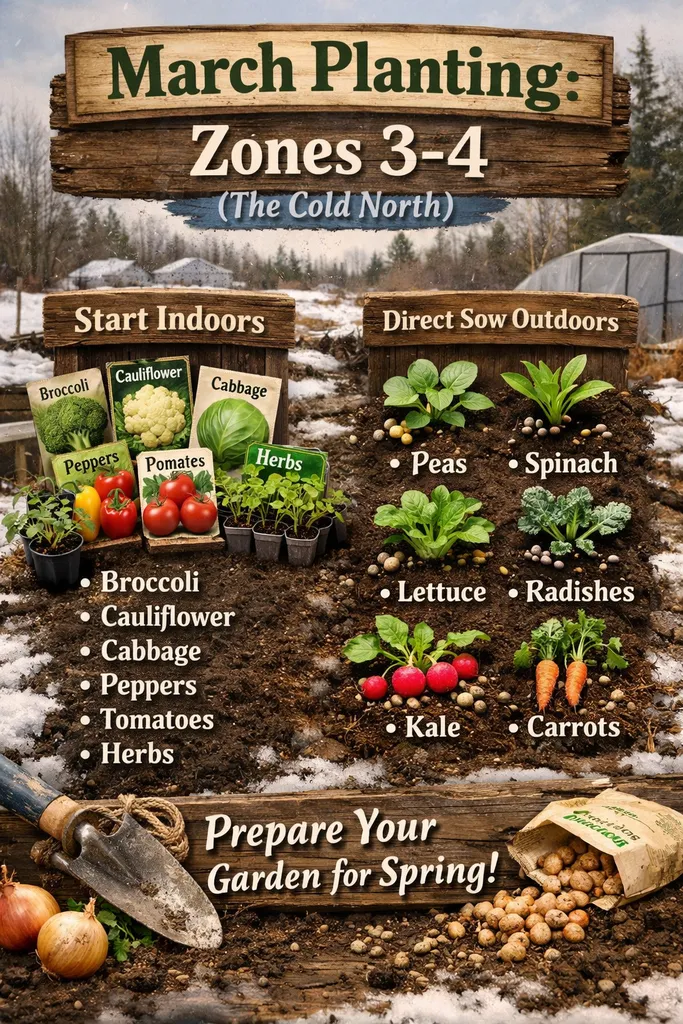
In these regions, March is still a “thaw month.” The ground is likely frozen, but the indoor grow lights should be burning bright.
- Indoor Starts: Broccoli, Brussels Sprouts, Onions, and Leeks.
- The Secret: Start peppers now; they need the longest lead time.
- Soil Prep: If the snow has melted, avoid walking on wet soil to prevent compaction.
March Planting: Zones 5-6 (The Transition Zones)
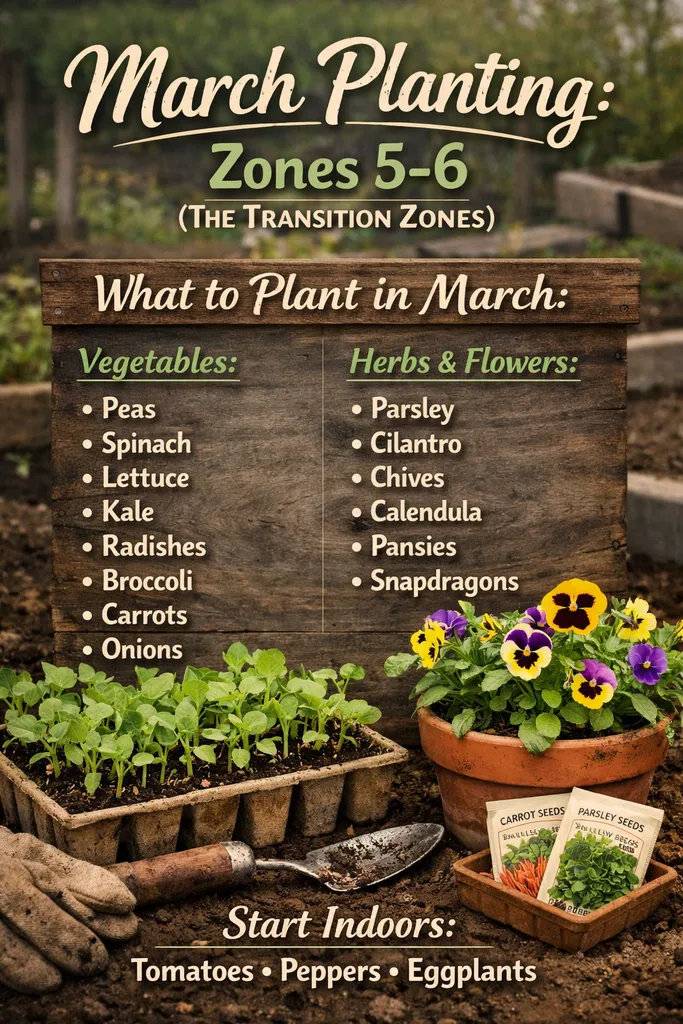
This is the busiest region in March. You are balancing indoor starts with the first outdoor “hardy” sowings.
- Direct Sow (Late March): Peas, Spinach, Radishes, and Garlic.
- Indoor Starts: Tomatoes (late March), Eggplants, and Cauliflower.
- Tip: Use cloches or “Wall-o-Water” protectors to gain 2 weeks on the season.
March Planting: Zones 7-8 (Spring has Sprung)
The soil is warming. Most “cool-season” crops should be in the ground by mid-month.
- Direct Sow: Carrots, Beets, Potatoes, and Turnips.
- Transplant: Cabbage and Kale seedlings started in February.
- Fruit: Plant bare-root strawberries and blueberries now.
March Planting: Zones 9-11 (The Warm South)
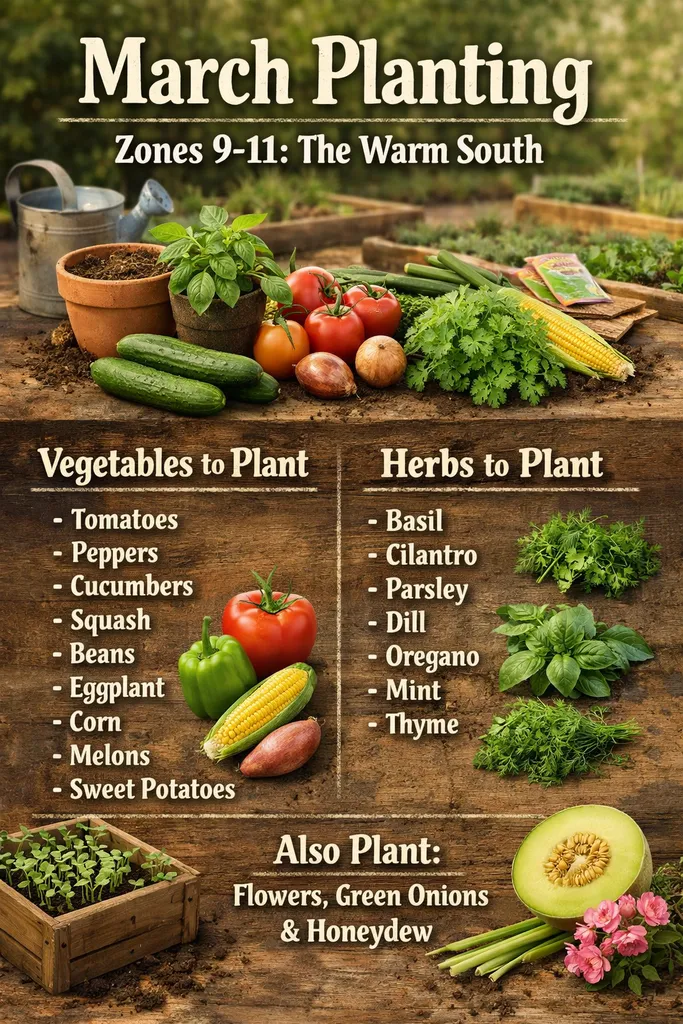
In the South, March is the start of the summer transition.
- Direct Sow: Corn, Beans, Squash, and Melons.
- Transplant: Tomatoes and Peppers can go out early in the month.
- The Problem: Watch for pests like aphids that emerge early in heat.
Organic Gardening Techniques for March
- Compost Tea: Give your seedlings a boost with a nitrogen-rich soak.
- Companion Planting: Sow Marigolds near your brassicas to deter early-season moths.
FAQ
- Can I plant tomatoes outside in March?
- Only in Zones 9-11. In cooler zones, they must stay indoors until the soil reaches at least 60°F (15°C).
- What is the “St. Patrick’s Day Tradition”?
- Traditionally, gardeners in many zones plant potatoes and peas on March 17th.
- How do I know if my soil is ready to work?
- Squeeze a handful of soil. If it crumbles, it’s ready. If it stays in a muddy ball, it’s too wet.
- Are UK zones the same as US zones?
- No. Most of the UK is Zone 8 or 9, but the damp, cool spring means you should plant as if you are in US Zone 7.
- Which herbs are best for March planting?
- Coriander (Cilantro), Parsley, and Chives love the cool March air.
- Should I fertilize in March?
- Yes, but only use slow-release organic compost for outdoor beds to avoid “burning” new roots.
- What if a surprise frost is predicted?
- Cover your outdoor seedlings with a frost blanket or old bedsheets (avoid plastic touching the leaves).
- Can I start seeds on a windowsill?
- Yes, but in March, light levels are often too low, leading to “leggy” plants. Use a cheap LED grow light for better results.
- What flowers can I plant in March? Sweet Peas (the flower), Pansies, and Violas thrive in the cold.
- How deep should I plant peas?
- Approximately 1 inch deep and 2 inches apart.
- Is it too late to prune fruit trees?
- In Zones 3-6, you can still prune while they are dormant. If they have budded, wait.
- Why are my March seedlings turning yellow?
- Usually, this is due to overwatering or “wet feet” in cold soil. Let the top inch of soil dry out.
Final Verdict
March is, in fact, the most important month for your successful 2026 garden. It creates a link between planning and action. The bottom line advice is zone your respect: don’t rush the heat-lovers (tomatoes/peppers) if you are North of The Mason-Dixon Line, but also don’t hold back on planting root crops (carrots/radishes) if you are South. By using this zone-by-zone class on how to do it, you’re not just planting seeds — you’re engineering a harvest that will feed your family and beautify your home for all 12 months of the year. Put on your gloves — it’s time to grow.

Leave a Reply